The 5 Things GLP-1 Weight Loss Quietly Takes — and the One Molecule Involved in All of Them
The weight is coming off. Something else is coming off with it. Here's the invoice — and the one molecule on every line item.
By Healthspan Weekly Editorial Team · August 31, 2026 · 8 min read

The scale is finally moving. So why do you feel worse?
Millions of people are losing weight on semaglutide and tirzepatide that no diet ever touched. That part of the story gets told constantly.
Here's the part nobody put in the brochure.
When you override a system that took two million years to build, you make a trade. And every trade comes with an invoice.
The medication isn't damaging you. The speed is billing you.
Physicians tracking GLP-1 patients keep seeing the same five things. Not side effects on a warning label — costs. Quiet, cumulative, and almost always unexplained to the patient.
Here they are, in the order people usually notice them.
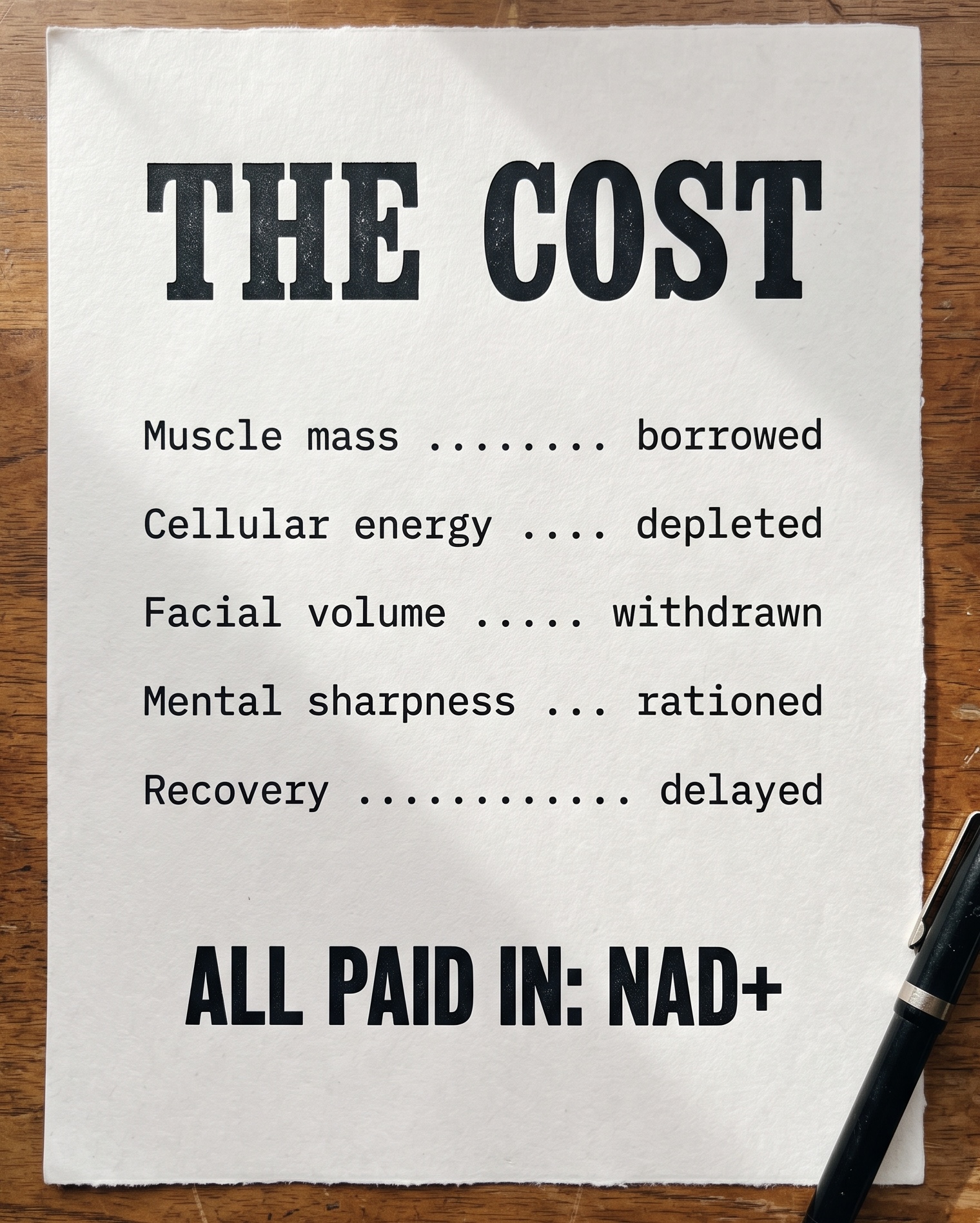
Cost #1: Your muscle, not just your fat
The scale can't tell you what the pounds were made of. Studies of rapid weight loss put lean mass at roughly 25 to 40% of everything lost when nothing is done to protect it.
Muscle is the engine that burns calories. Lose it and you lower the floor you'll have to maintain from later.
That's why some people feel weaker while the numbers look better than ever.
Cost #2: Cellular energy — the crash caffeine won't fix
Eating dramatically less means your cells receive dramatically less raw material for making energy.
Patients describe it the same way, over and over: fine at 9am, flattened by 1pm. A second coffee does nothing. It isn't laziness. It's supply.
Cost #3: Your face
"Ozempic face" isn't vanity. It's volume loss — fat leaving fast while cellular repair slows down, and it shows up first where skin is thinnest.
What you see in the mirror is the visible version of what's happening everywhere else.
Cost #4: Mental sharpness
The brain is the most energy-hungry organ you own. When cellular energy production dips, it gets rationed first.
Losing words mid-sentence. Rereading the same email. Fog by mid-afternoon. Usually the complaint people are most reluctant to say out loud.
Cost #5: Recovery
Workouts take three days to bounce back from instead of one. A small tweak lingers for a month. Sleep restores less than it used to.
Repair is expensive — and the budget just got cut.
All five run on the same molecule
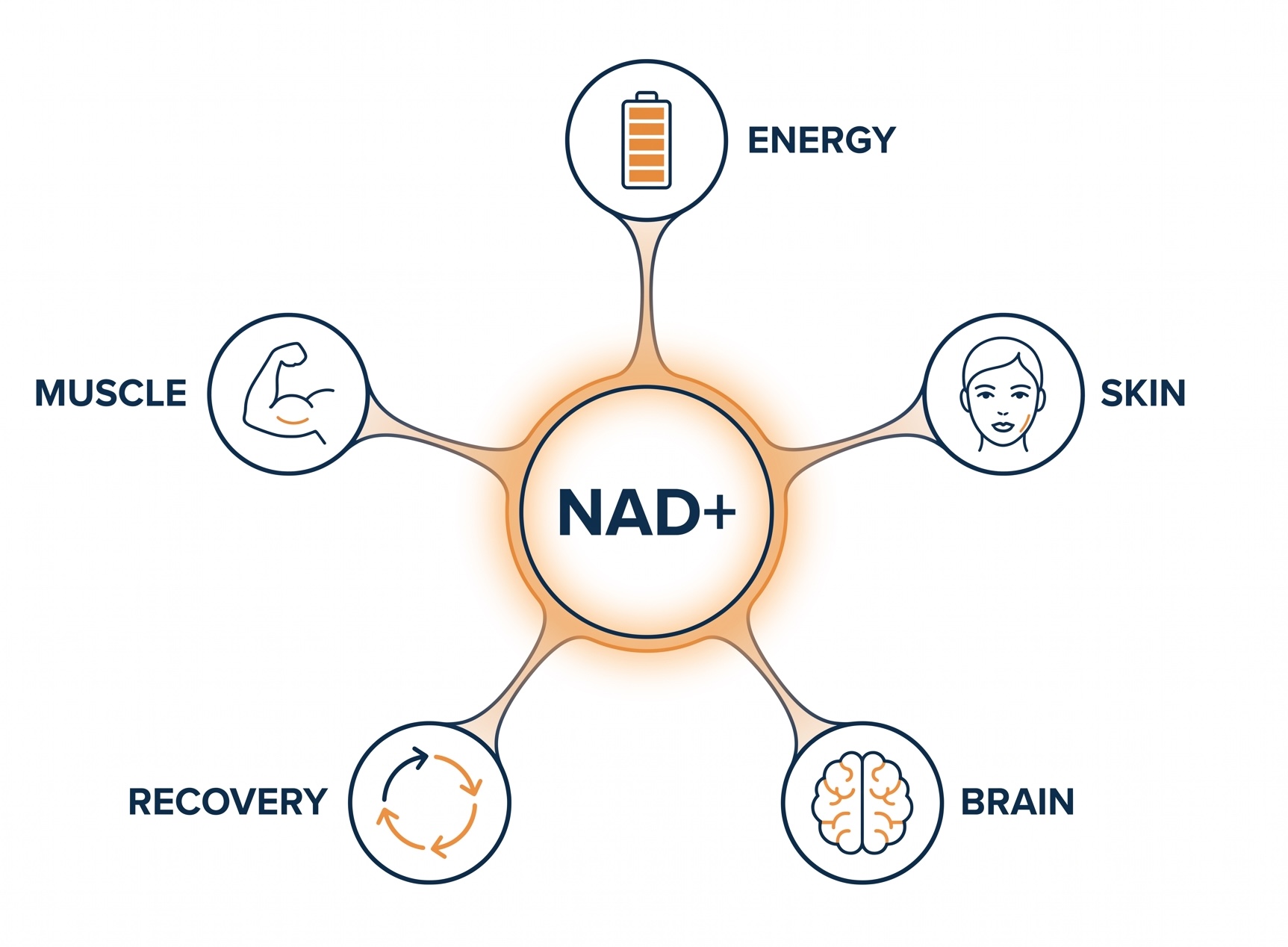
Muscle. Energy. Skin. Brain. Recovery.
Every one of them depends on NAD+, a coenzyme in every living cell that powers energy production, DNA repair and cellular maintenance.
Two facts collide here:
- NAD+ falls with age on its own — commonly cited estimates put it near half of youthful levels by midlife.
- Cellular stress raises demand for it — and rapid weight loss is exactly that kind of stress.
A GLP-1 protocol increases the need for the one molecule midlife already drained.
That's the gap. Not a flaw in the medication — a missing half of the protocol.
Why most NAD+ products don't do anything
Oral NAD+ absorbs poorly. Your digestive system dismantles most of the molecule before it ever reaches circulation.
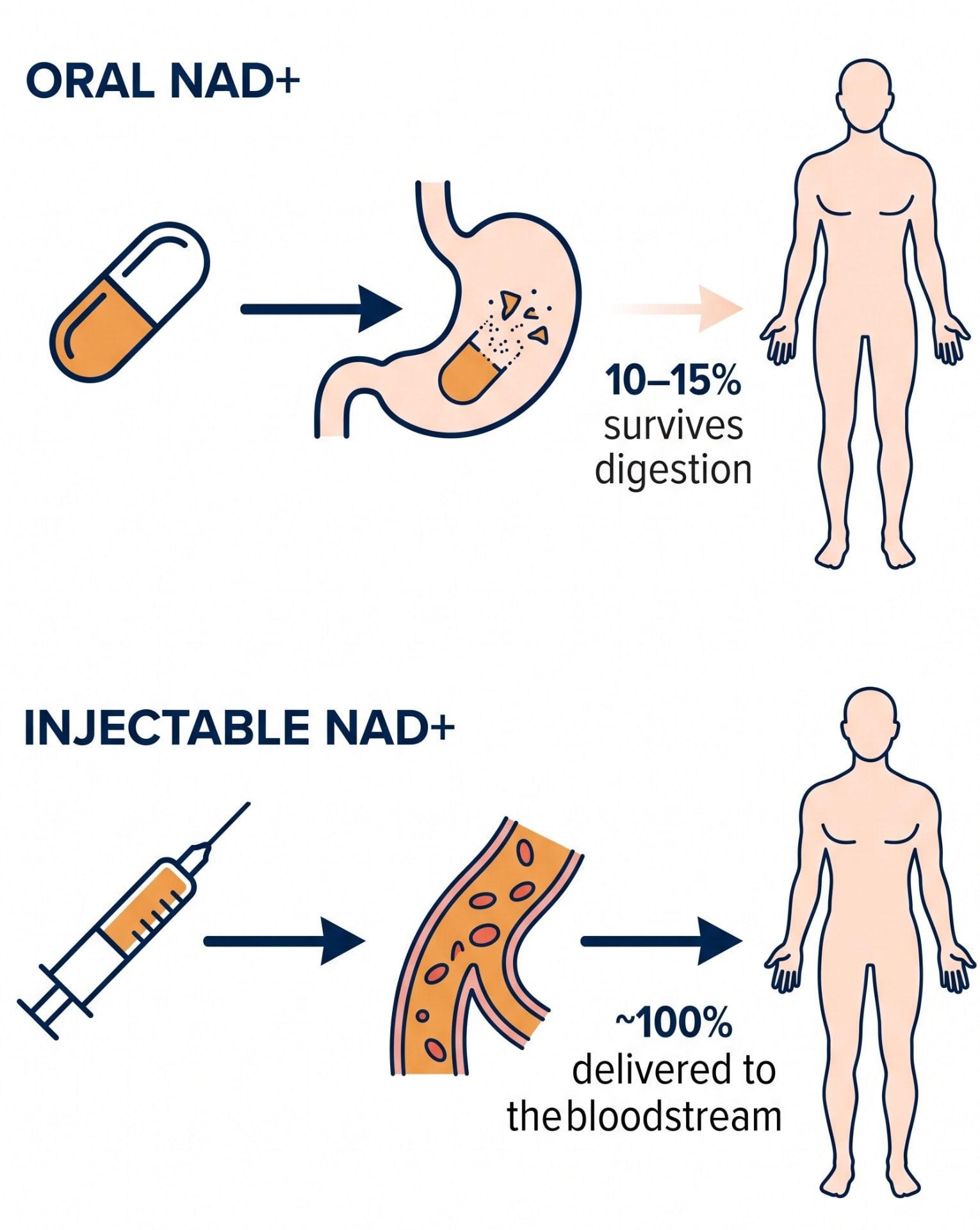
Which is why the format physicians actually prescribe is injectable NAD+ — delivered straight into the bloodstream, at a dose high enough to matter.
Frequently asked questions
Is NAD+ safe alongside a GLP-1?
A licensed physician reviews your health intake, including current medications, before prescribing.
How fast do people notice a difference?
Many patients report changes within the first two weeks; individual results vary.
Do I stop my GLP-1?
No — this isn't a replacement. Talk to your prescriber about your protocol.
What if I'm not approved?
Then you're not charged. The review happens before any payment is taken.
The weight is already coming off. The question is what else goes with it.
Takes about 2 minutes · $100 off applied automatically
These statements have not been evaluated by the FDA. NAD+ injections are not intended to diagnose, treat, cure, or prevent any disease or to treat side effects of any medication. Individual results vary.